
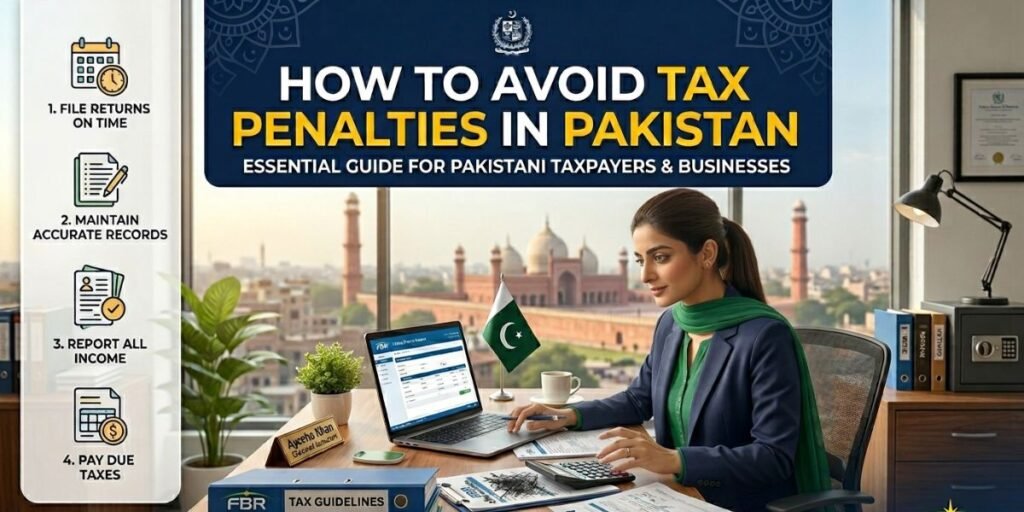
All the people who are doing business in Pakistan, paying taxes is a necessary duty. There is a system in Pakistan that keeps a strict eye on everyone who pays tax on time or who ignores it. Understanding tax laws, keeping accurate records, filing returns on time, and meeting all legal requirements are all necessary to avoid tax penalties rather than trying to find ways to avoid paying taxes.
Taxpayers may significantly reduce their risk of fines and legal issues through the use of good compliance practices. The main reasons for tax penalties in Pakistan are explained in this article, along with helpful advice on how taxpayers can avoid them.
Understanding Pakistani Tax Fines
Financial or legal penalties for taxpayers who break tax laws are known as tax penalties. Fines are meant to ensure that taxpayers fulfill their legal responsibilities and to promote conformity Penalties can differ from minor financial fines to significant assessments and legal action, depending on the type and seriousness of the violation.
Income tax, sales tax, federal excise duty, and withholding tax provisions are just a few of the tax laws that can put penalties. As a result, taxpayers need to realize that filing an annual income tax return is just a single component of conformity.
Register with the Tax Authorities
Making sure you have been properly recorded with the right taxing body is one of the best ways to avoid paying taxes. A National Tax Number and all necessary registrations should be obtained by people who earn taxable income and companies that perform standard taxable activities.
Companies that sell taxable supplies might also need to register for sales tax. Fines, limitations on business operations, and higher scrutiny by tax authorities may arise from failing to register when required by law.
Taxpayers should make sure that their registration information is up-to-date and correct on a regular basis. To prevent issues with conformity, changes in company addresses, ownership structures, contact details, or business operations should be reported quickly.
On-time filing of tax returns
One of the most frequent causes of penalties for taxpayers is late submission of tax returns. Every taxpayer should plan to file their returns before the deadline and be aware of any applicable filing time limitations.
Many taxpayers put off filing until the final few days, which raises the possibility of mistakes in calculations, missing paperwork, or technical issues. Preparing returns well in advance is a better approach.
There are various advantages to timely filing:
- Avoiding fines for late filing.
- Decreased chance of failure fees.
- Preservation of an active taxpayer status.
- Improved relations with tax authorities.
- Easier access to business opportunities and financial services.
Taxpayers can keep track of significant filing deadlines throughout the year by making an agreement calendar.
Pay Taxes before the Due Dates
If taxes are still outstanding, filing a return might not be enough. Any tax responsibility shown on the return must be paid by the taxpayer within the specified period of time.
Additional fees may be introduced for late payments. Over time, these extra expenses can grow up and significantly raise the taxpayer’s total responsibility.
In order to prevent charges related to payments, taxpayers should:
- Calculate your tax responsibilities in advance.
- Keep enough money on hand to pay taxes.
- Keep an eye on your advance tax responsibilities.
- Use granted banking channels to pay taxes.
- Maintain records and receipts for payments.
The lack of ability of taxpayers to pay their taxes on time can be avoided with careful financial planning.
Keep Correct Financial Records
Maintaining accurate records is necessary for paying taxes on time. To confirm information included in tax returns, tax authorities may ask for additional paperwork.
Taxpayers should keep documents like:
- Statements from banks.
- Payments for sales.
- Buy billing documents.
- Pay information.
- Utility bills.
- Agreements and contracts.
- Documents for the purchase of property.
- Receipts for tax payments.
Properly preparing returns and effectively answering any questions from tax authorities are made easier with well-organized records. Inaccurate reporting from poor record-keeping frequently results in fines during checks or inspections.
Make sure your tax returns are accurate.
Even when there is no desire to avoid paying taxes, mistakes in tax returns can lead to problems with compliance. Fines may result from incorrect calculations, missing income, incorrect tax credits, or false asset declarations.
Just before filing a return, taxpayers ought to carefully examine:
- Personal data.
- Income numbers.
- Deductions for taxes.
- Tax breaks
- Declarations of assets.
- Details of a bank account.
- Taxes have already been paid.
A detailed examination procedure lowers the possibility of future arguments and helps find errors before submission.
Update Property Declarations
In their yearly tax returns, taxpayers are frequently required to list assets and debts. Tax authorities may take notice of incomplete or incorrect declarations.
Assets could consist of:
- Real Estate
- Cars
- Bank Accounts
- Investments
- Commercial Interests
- Foreign Resources
Records attesting to the purchase and ownership of property should be kept by taxpayers. Correct documentation lowers the possibility of unfavorable evaluations and helps in explaining wealth increases.
Common Mistakes That Result in Fines
Penalties are often imposed on taxpayers due to mistakes that could have been like:
- Missing deadlines for filing
- Failure to report earnings
- Neglecting to keep records
- Incorrect tax computations
- Ignoring tax notices
- Failure to pay taxes due
- Not deducting or refusing taxes
- Incomplete statements of property
Taxpayers can take precautions by being aware of these frequent mistakes.
Last Words
To conclude I would like to say that In Pakistan, avoiding tax fines requires proactive conformity. Taxpayers must register correctly, keep accurate records, file returns on time, pay taxes on time, disclose all income and reply to written messages from tax authorities as soon as possible. In accordance efforts are further strengthened by regular reviews, expert advice, and knowledge of legal developments.
Tax compliance should be seen as a proper banking information practice that protects people and companies from unnecessary expenses, legal issues. Taxpayers may significantly reduce their risk of fines and preserve good relations with Pakistan’s tax administration system by following proper record-keeping, accurate reporting, and timely filing practices.